Dry ice · sifting with dry ice

Fifteen minutes, start to finish.

Dry ice at −108 °F (−78 °C) makes trichomes brittle in seconds. Material and ice in the bag, a few short passes, and the resin comes through the mesh as powder.

Work Bags from R$ 99.90 · ships anywhere in Brazil

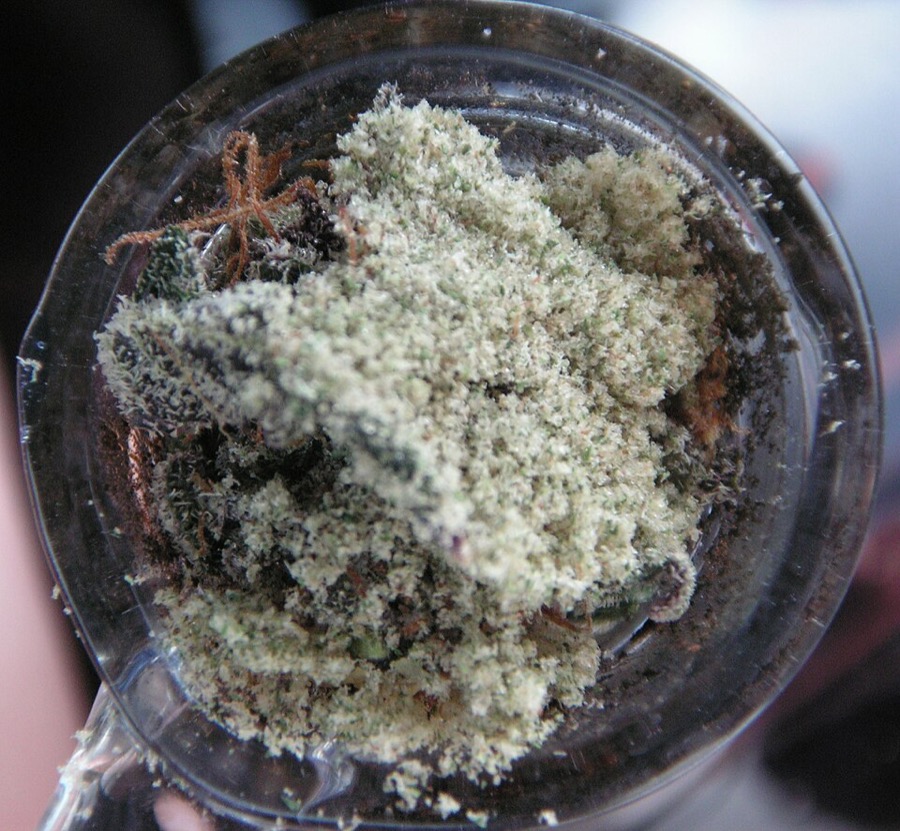
Light kief heaped in a glass bowl
Kief: powdered resin
Typical range
5 to 15%
technical reference
Microns
220u for bulk · 160u and 73u for refining
Dry ice
−108 °F (−78 °C) — gloves and ventilation, always
Solvent
None — mesh and solid CO₂

On this page

Everything about Dry Ice, on one page.

The path explained start to finish and, right below it, the full guides — the same ones you open at the bench with wet hands. Click to jump straight to a part, or scroll and read it all in order.

sections on the path
8
full guide
1
min read
7

What it is

Dry ice — solid CO₂, at −108 °F (−78 °C) — freezes trichomes in seconds and makes them brittle. Material and ice go together into a mesh bag; as you agitate, the resin comes through as powder. It's dry sifting with the cold taken to the extreme: very fast, very high yield, and a quality that depends on stopping at the right moment.

Who it's for

For anyone with volume — trim, sugar leaf, small flower — who wants to turn it into extract the same day, with no water and no drying. The result is great for pressing: 73u dry ice makes very good rosin.

Difficulty
Simple — the only thing to watch is the dry ice.
Investment
A mesh bag and the day's dry ice.
Quality ceiling
Yields a lot; shines once pressed.

The path in one image

Dry Ice specs.

  1. 1

    Dry iceSolid CO₂, at −108 °F (−78 °C). Gloves, always.

  2. 2

    The fog is CO₂As it warms it turns to gas, which sinks: work with ventilation.

  3. 3

    The bag's meshThe micron size decides how much plant matter gets through.

  4. 4

    Powdered resinThe frozen trichomes break and pass through the mesh.

Principle
Dry sifting with the cold of solid CO₂
Solvent
None
Material
Dry trim and flower — the drier, the better
Dry ice
−108 °F (−78 °C) · gloves and ventilation, always
Ratio
1:1 to 1:2 dry ice to material, by weight· technical reference
Contact
2 to 3 min before agitating· technical reference
Passes
20 to 60 s each, one micron size at a time· technical reference
Microns
220u for bulk · 160u and 73u for refining· technical reference
Bags
220u Work Bag (15L and 25L) and individual bags in food-grade nylon· catalog
Result
Kief in volume — made for the press

How it's done

Six steps, and what decides each one.

  1. 01

    Set up the bench and the protective gear

    Thick gloves, a ventilated area, and a smooth, clean, dry surface to catch the powder. Dry ice burns skin in seconds and, as it sublimates, turns into CO₂ — which sinks and pools in an enclosed space.

    TipBreak the dry ice into small pieces before you start. Big chunks tear material and mesh.

    What goes in

    Thermal gloves, tongs, and a bench outdoors or in a well-ventilated space.

  2. 02

    Dry, cold, loose material

    The method is for dry material. Moisture freezes around the trichomes, clumps up on the mesh, and carries water into the powder. Pull out thick stems: they only take up space and puncture the bag.

    TipSome time in the freezer beforehand helps: the material arrives cold and the dry ice goes further.

  3. 03

    Contact: ice and material in the bag

    Material and dry ice go into the bag together. Before agitating, leave the two in contact for 2 to 3 minutes: that's the time the extreme cold needs to make the trichomes brittle.

    TipWrite down how many grams of ice for how many grams of material. The reference runs from 1:1 to 1:2 — and it's the variable that changes the result most between two runs.

  4. 04

    Short passes, one micron size at a time

    On the 220u a lot comes out, and fast: it's the bulk pass, with more plant matter mixed in. On the 160u and the 73u the result is cleaner — that's where it pays to spend the time. Each pass lasts seconds, not minutes.

    Tip20 to 60 seconds per pass. Long agitation breaks frozen leaf, and green gets into the powder faster than in any other method.

  5. 05
  6. 06

The path by the numbers

What to measure, and what to expect.

Three meshes, three results

The same material changes category with the mesh: bulk on the coarsest, press material on the finest.

  1. 220u

    Volume — A lot comes out, and fast, with more plant matter mixed in.

  2. 160u

    Balance — Less volume, visibly cleaner powder.

  3. 73u

    Refining — The best of the method — and what's worth pressing.

where the best material usually ends upMicron sizes available in 6 Stars individual bags (Clássicas: 220u, 160u, 120u, 73u, and 25u; Full Mesh: from 220u to 25u in eight rungs).

Typical yield range

Yield is the weight that comes out divided by the weight of the material that went in.

Typical reference range, not a promise: yield depends on the material, the genetics, and how the process is run. Each path has its own yardstick: you can't compare yields across processes.

Temperatures and times are starting points, not a recipe: adjust to your material and write down what changed.

What changes the result

Six variables. Change one at a time.

Change two things in the same run and you won't know which one made the difference. Write down what changed: that's what turns a good run into a process you can repeat.

  1. 01

    Grams of dry ice

    It's the fuel of the method. Too little ice doesn't freeze all the material; too much just dilutes the process.

    too little ice · ↓ yield

  2. 02

    Ice-to-material ratio

    The variable that changes the result most from one run to the next — and the one that slips from memory fastest from one week to the next.

    the variable that matters most

  3. 03

    Agitation time

    A few extra seconds turn into broken leaf in the powder. Here, haste costs quality faster than on any other path.

    ↑ time · ↓ purity

  4. 04

    Bag micron size

    The 220u delivers volume; the 160u and the 73u deliver cleanliness. The choice decides whether the powder is everyday material or press material.

    ↓ micron · ↑ purity

  5. 05

    Number of passes

    Each pass yields more and gets a little worse. Separating by pass preserves the best one.

    ↑ passes · ↑ yield · ↓ purity

  6. 06

    Method: shake bag, tumbler, or Trim Box

    Changes the force of the agitation and how consistently it repeats. Agitating by hand is the most variable of the three.

    changes force and repetition

Common mistakes

Where the result gets lost.

  • Handling dry ice bare-handed

    Cold burns happen in seconds. Thick gloves, always — no “just a little piece”.

  • Working in an enclosed space

    CO₂ sinks and pools. Outdoors, or with real ventilation.

  • Storing dry ice in a sealed container

    It turns to gas and needs to escape. A closed container builds up pressure.

  • Agitating too long

    Frozen leaf breaks easily. A long pass is the fastest way to turn kief into green powder.

  • Using moist material

    The moisture freezes, clumps up on the mesh, and ends up in the powder.

  • Not writing down the ratio

    Without it, you can't repeat the good run or understand the bad one.

The path to 6★

Here the goal is different.

Dry ice rarely reaches 6★ — and that isn't what it's for. It's the path of volume and speed. The best of the method is in short passes on a fine mesh, and it shows what it's worth once pressed: 73u dry ice makes seriously good rosin.

  • First pass on each mesh
  • 73u mesh
  • Light powder, no green
  • Destination: the press
The 1★ to 6★ scale
  1. Visible plant matter
  2. Barely melts
  3. Partial melt
  4. Melts well, leaves residue
  5. Almost full melt
  6. Full melt: melts completely

FAQ

Before you buy Dry Ice equipment.

Don't see your question? Message 6 Stars on WhatsApp.

Which bag should I use with dry ice?

The 220u Work Bag is the agitation bag, the bulk one. For refining, the individual bags — Clássicas or Full Mesh — come in smaller micron sizes; the 18L Clássicas are listed on their own spec sheet as dry-ice compatible.

Can I use the bags from the ice kit?

You can: it's the same food-grade nylon mesh. Just make sure they're completely dry first — any water freezes on contact with the dry ice and seals the mesh.

Dry ice or dry sift?

Dry ice is faster and yields more, with lower average quality. Dry sift is slower and more controllable, with a higher quality ceiling. Plenty of people use both: dry sift for the flower, dry ice for bulk trim.

How much dry ice do I need?

The reference runs from 1:1 to 1:2 dry ice to material, by weight. Start in the middle and write it down: the right ratio varies with the material, and only the log shows which one is yours.

Guide 1 of 1Main guide

Dry ice: rendimento rápido, com o preço da contaminação

Quinze minutos do começo ao fim. A proporção de gelo seco, o tempo de cada passada, a ordem das bags — e o cuidado com a condensação que ninguém conta.

  • 7 min read
  • 7 steps in the walkthrough
  • 10 sections

01

Parâmetros de referência

Proporção

1:1 a 1:2

gelo seco : matéria, em peso

Contato antes de agitar

2 a 3 min

Primeira passada

20 a 30 s

a melhor fração

Passadas seguintes

30 a 60 s

cada, coletadas em separado

Micragem

73u e 160u

para qualidade

220u

para volume

Tamanho do gelo seco
Pedaços pequenos, do tamanho de uma noz
Descanso antes de fechar no pote
Até o pó voltar à temperatura ambiente, em sala seca
Faixa típica de rendimento

5 a 15 %

02

Segurança primeiro

  • Gelo seco está a −78 °C: luva grossa sempre, nunca na mão nua. Queimadura de frio acontece em segundos
  • Ele não derrete, sublima em CO₂. Trabalhe em local ventilado — CO₂ é mais pesado que o ar e se acumula no chão de ambiente fechado
  • Nunca guarde gelo seco em recipiente vedado: a pressão do gás estoura pote, garrafa e tampa de rosca. Caixa de isopor com a tampa apenas apoiada
  • Óculos de proteção ao quebrar o gelo, e o que sobrar sublima sozinho em área aberta — não jogue em pia nem em ralo

03

Antes de começar

0 of 7 ready

Equipamento
Matéria
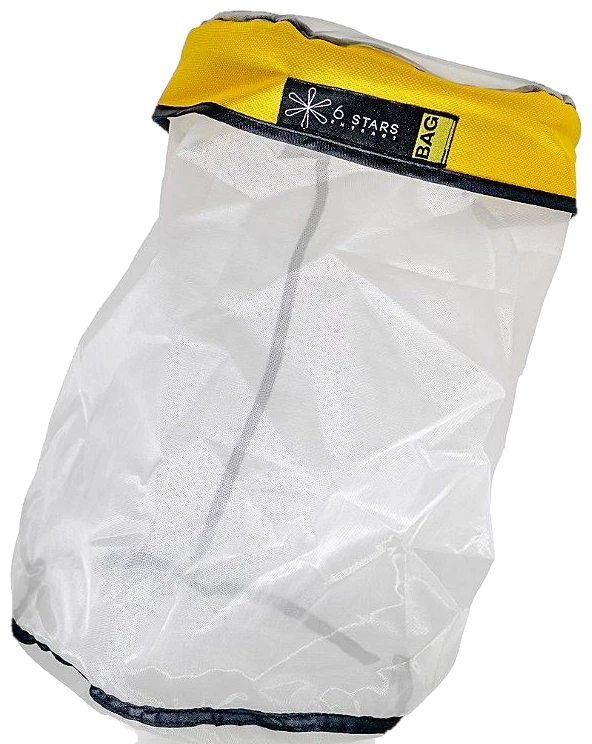
Work bag 6 Stars de 220u, com zíper e boca amarela
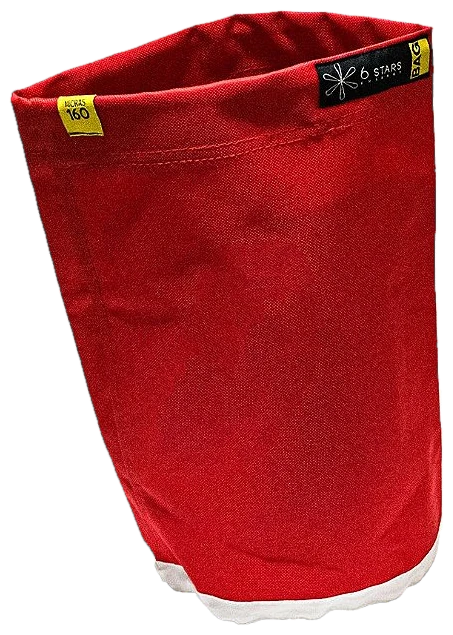
Bag clássica vermelha 6 Stars, a de 160u
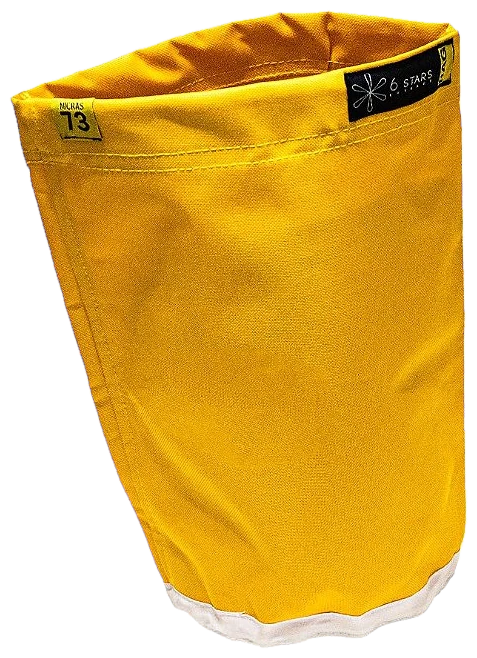
Bag clássica amarela 6 Stars, a de 73u
A work bag de 220u para volume; as clássicas de 160u e 73u para as frações limpas.

04

Passo a passo

  1. 01

    Quebre o gelo seco

    Enrole o bloco em um pano e quebre com o martelo de borracha até ficar em pedaços do tamanho de uma noz. Pedaço grande bate na matéria e tritura folha; pedaço pequeno gela por igual e some rápido.

  2. 02

    Misture e espere 2 a 3 minutos

    • 2 a 3 min

    Matéria e gelo seco no balde, mexidos de leve, e a bag vestida na boca do balde. O frio extremo deixa o tricoma quebradiço na hora — e é por isso que o método é tão rápido.

  3. 03

    Primeira passada na bag mais fechada

    • 73u
    • 20 a 30 s

    Comece pela micragem mais fechada que você tem (73u): vire o balde com a bag para baixo e agite de 20 a 30 segundos sobre a superfície de coleta. Sai pouco e sai limpo. Junte com o cartão e guarde: é a melhor fração do run.

  4. 04

    Passadas seguintes

    • 30 a 60 s

    Repita em passadas de 30 a 60 segundos, coletando cada uma em separado. A cor conta a história: enquanto o pó sai dourado, continue; quando esverdear, a fração nobre acabou.

  5. 05

    Suba de micragem

    • 160u
    • 220u

    A mesma matéria passa para a 160u e, por último, para a 220u. Cada troca rende mais e entrega menos pureza — a 220u é a passada de volume, com bastante material vegetal junto. Bom destino para ela: a bag de rosin.

  6. 06

    Deixe o frio ir embora antes de fechar o pote

    Este é o cuidado que ninguém conta. O pó sai muito abaixo de zero e puxa a umidade do ar como um copo gelado. Espalhe em camada fina, em sala seca, até todo resto de gelo sublimar e o pó voltar à temperatura ambiente. Pote fechado com pó gelado é condensação por dentro — e condensação vira mofo.

  7. 07

    Pese e guarde

    Pese cada fração, identifique micragem e passada e guarde em vidro vedado, no frio e no escuro.

05

Dicas de bancada

06

Erros comuns e como corrigir

  • Sintoma

    Pó verde já na primeira passada

    Causa provável
    Agitação longa, gelo em pedaços grandes ou matéria seca demais
    Como corrigir
    Passadas de 20 a 30 s, gelo menor, comece pela 73u
  • Sintoma

    Pó empelotado e úmido

    Causa provável
    Condensação: sala úmida ou pote fechado cedo
    Como corrigir
    Seque em camada fina antes de guardar; desumidificador na sala
  • Sintoma

    Mofo no pote dias depois

    Causa provável
    Pó guardado ainda gelado
    Como corrigir
    Espere voltar à temperatura ambiente, em sala seca
  • Sintoma

    Bag furada

    Causa provável
    Galho grosso ou gelo em blocos batendo na malha
    Como corrigir
    Tire os galhos e quebre o gelo menor
  • Sintoma

    Rendimento alto e qualidade baixa

    Causa provável
    Só a 220u foi usada
    Como corrigir
    Colete primeiro na 73u e na 160u, deixe a 220u por último

07

Como avaliar o resultado

Dry ice rende mais que dry sift e, na média, entrega menos pureza: o choque térmico quebra folha junto com tricoma. Avalie cada passada em separado, com lupa e com calor.

  1. 5★ a 6★
    Aparência
    Dourado claro, só cabeças na lupa — raro neste método
    No calor
    Derrete quase todo ou por completo
  2. 4★
    Aparência
    Bege, algum contaminante
    No calor
    Meio melt, resíduo visível
  3. 3★
    Aparência
    Bege-esverdeado
    No calor
    Borbulha pouco — a fração ideal para prensa
  4. 1★ a 2★
    Aparência
    Verde, com fiapo e folha
    No calor
    Não derrete: prensa ou uso culinário

08

Armazenamento

Vidro vedado, frio e escuro, uma fração por pote. Como no dry sift, deixe o pote voltar à temperatura ambiente antes de abrir para não condensar água no pó.

09

Perguntas de bancada

Quanto tempo o gelo seco dura?

Pouco. Ele sublima o tempo todo, mesmo dentro do isopor: compre para o dia do uso e calcule sobra. Guardar de um dia para o outro é perder boa parte do que comprou — e o recipiente nunca pode ser vedado.

Posso usar as mesmas bags do ice?

As bags clássicas 6 Stars são indicadas também para gelo seco. A condição é estarem completamente secas: bag úmida congela na hora, a malha entope e o pó empelota.

Por que meu pó ficou úmido?

Condensação. O pó sai muito abaixo de zero e puxa a umidade do ar como um copo gelado. Sala seca durante o trabalho e descanso em camada fina antes de fechar o pote resolvem.

Dá para prensar o resultado?

Dá, e é o melhor destino para a maior parte do que o método entrega. As frações de 73u e 160u viram rosin limpo; a de 220u rende volume e pede bag de rosin mais fechada.

10

O que registrar

  • Matéria: tipo, genética e peso de entrada
  • Gramas de gelo seco e a proporção gelo : matéria
  • Tempo de contato antes de agitar
  • Micragem de cada bag usada e a ordem
  • Número de passadas e o tempo de agitação de cada uma, em segundos
  • Método: shake bag, tumbler ou Trim Box
  • Peso de cada fração, por micragem e por passada
  • Peso final, estrelas de cada fração, temperatura e umidade da sala

The five paths, side by side

Each process needs its own equipment.

Solvent, material, pace, and profile for each one. Yield is left out of the table on purpose: each path has its own yardstick.

  • Ice
    Difficulty
    Investment
    Quality ceiling
    Solvent
    None
    Material
    Fresh frozen or cured
    Pace
    Hours of washing, days of drying
  • Dry Sift
    Difficulty
    Investment
    Quality ceiling
    Solvent
    None
    Material
    Dry flower and trim
    Pace
    Minutes per pass
  • Dry Ice
    Difficulty
    Investment
    Quality ceiling
    Solvent
    None
    Material
    Dry trim and flower, in volume
    Pace
    About 15 minutes
  • Rosin
    Difficulty
    Investment
    Quality ceiling
    Solvent
    None
    Material
    Flower, hash, dry sift, or kief
    Pace
    Minutes per press
  • BHO
    Difficulty
    Investment
    Quality ceiling
    Solvent
    Butane (flammable)
    Material
    Dry flower and trim, or fresh frozen
    Pace
    Fast extraction, 24 h or more of purge

Build your Dry Ice setup.

Go straight to the store, or message 6 Stars on WhatsApp to pick the right model and size the kit. Ships anywhere in Brazil.

Dry ice: sifting with dry ice, bags, and safety · 6 Stars Extract